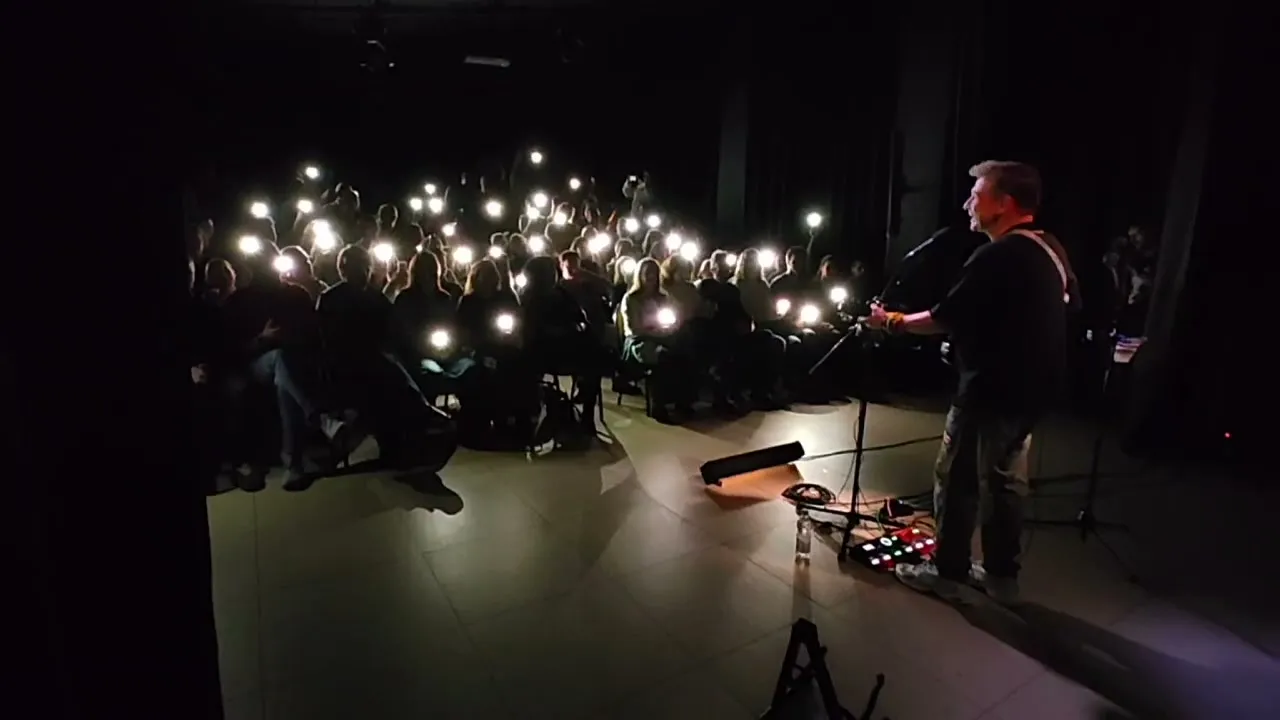
At big concerts and stadiums the audience has long been part of the light show. But thousands of devices need to be synchronized somehow. Here are three approaches used today.
Which technologies events use
- Registration. QR tickets, badges printed on site, face entry at large forums
- Engagement. Online voting, audience questions to speakers, quizzes answered in the browser
- Visuals. LED screens, video mapping, AR photo zones
- Streaming. Hybrid formats, recording and social clips right after the talks
- Crowd synchronisation. Light in every spectator’s hand: wristbands or phones
The main shift of recent years: organisers are moving away from dedicated event apps to web pages opened via QR code. Almost nobody wants to install an app for one evening. Below is a closer look at the most spectacular group of technologies, crowd synchronisation.
PixMob: infrared-controlled wristbands
The Canadian company PixMob has been around for over 20 years, and its wristbands have been on Taylor Swift and Coldplay tours. The audience gets LED wristbands, and commands come from infrared transmitters placed around the venue.
Pros: precise sync, bright colours, works in any light. Cons: wristbands have to be bought or rented, handed out, collected and charged. It is expensive: Coldplay’s wristbands are estimated at about 400,000 euros per concert. More in our article about LED wristbands for concerts.
CUE: a sound signal instead of the network
The American company CUE sends commands as sound from the venue speakers, and viewers’ phones pick them up. It used to require an app, and now CUE also works through the browser: that was the case at a 2026 World Cup match.
Pros: nothing to hand out. Cons: the result depends on the venue’s sound and acoustics.
GROMKA.SHOW: ultrasound and the browser
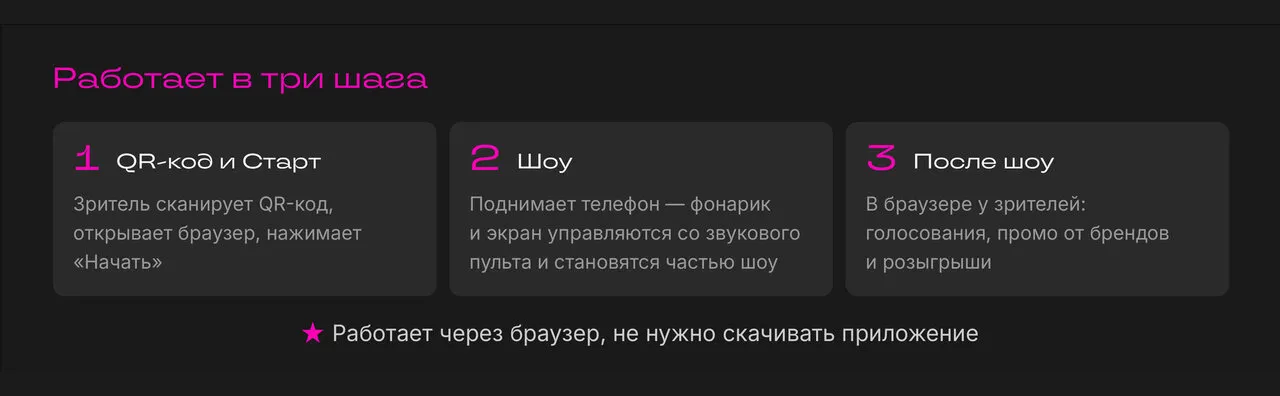
We also send commands by sound, but as ultrasound people can’t hear. A viewer scans a QR code, opens the page in the browser, and their phone flashlight flashes together with the crowd. No internet is needed during the show: we tested it in a planetarium with the network jammed. The technology is our own, and patents are being filed.
Pros: no logistics, seat-based pictures and waves on top of flashing, and after the show a sponsor promo or prize draw opens in the same browser. Cons: the effect is stronger in a dark hall than in bright light.
In short
- Logistics: PixMob wristbands must be handed out and collected, CUE and GROMKA.SHOW only need a QR code on screen
- Cost: wristbands are the most expensive because of purchase and logistics
- Complex effects: wristbands give an exact colour on every wrist, GROMKA.SHOW gives pictures and waves from flashlights
- Contact after the show: wristbands have none, GROMKA.SHOW gives every participant a promo and prize draw in the browser
How our ultrasound works is in how the light show works. Where it works: concerts and festivals, stadiums.