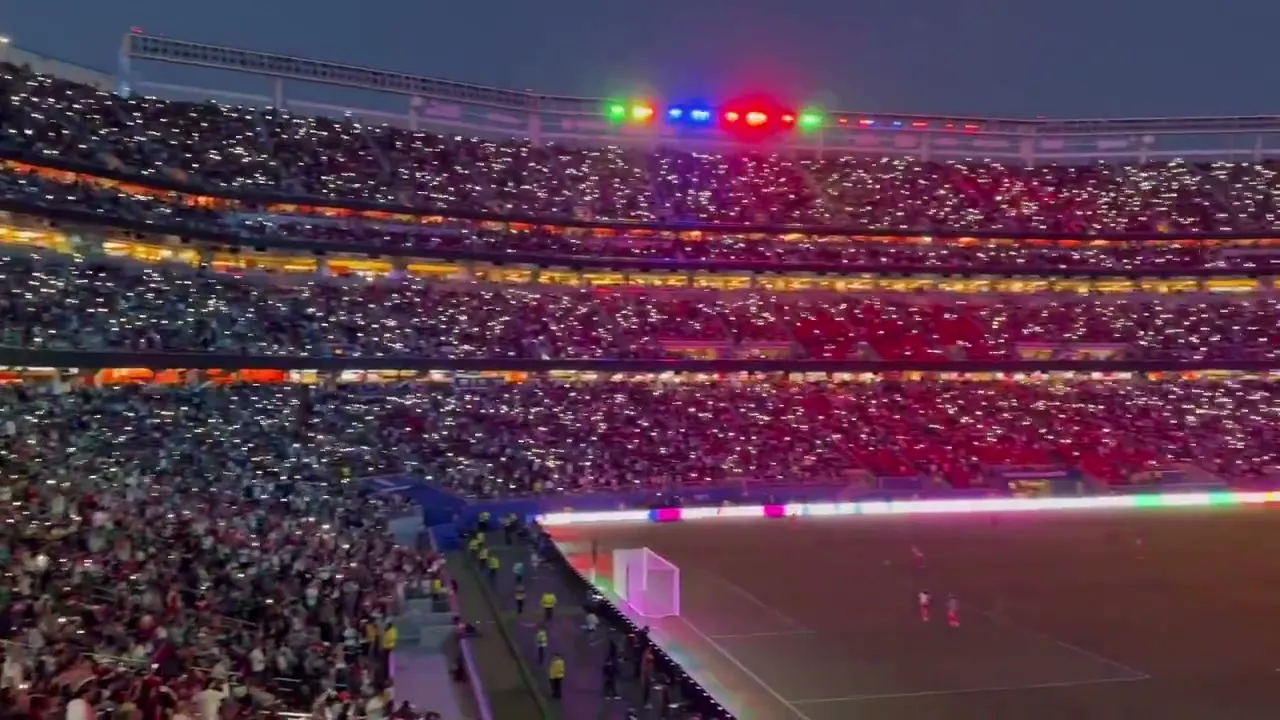
At big concerts the audience gets light-up wristbands, and the crowd glows along with the music. Coldplay does it, and so do many others. The effect is strong, but it comes with rental, logistics and serious money.
How concert wristbands work
Each controllable wristband has LEDs and a receiver. A signal goes from the lighting desk by radio or infrared, and the wristbands change colour and flash on command. Standard wristbands are split into groups, usually up to 20, each lighting up in its own colour. Expensive “pixel” wristbands are controlled one by one, like dots on a screen.
Types of glowing wristbands
- Chemical glow stick bracelets. Light up when bent: two substances mix inside. They glow for a few hours and cannot be switched off. Cheap, sold in bulk for parties
- LED bracelets with a button. A battery and several blink modes. Everyone picks their own, no sync
- Controlled wristbands. Receive infrared or radio commands, so the whole room blinks together. These are handed out at Coldplay concerts and other big tours. They are usually rented with a crew rather than sold
If a concert wristband keeps glowing or blinking at home, it is picking up stray signals or running a demo mode. On most models the battery can be removed by unscrewing the cover. Some organisers ask for wristbands back at the exit to reuse them.
What renting them costs
Controllable LED wristbands are rented per unit per day, and you pay for every viewer. For 10,000 people that adds up to a large budget for the wristbands alone. Buying glow bracelets in bulk is cheaper, but simple light-up bracelets are not controlled from a desk and blink on their own.
On top come delivery, handout at the door, collection after the concert, charging and losses: some wristbands go home with the audience. Coldplay’s wristbands are estimated to cost about 400,000 euros per concert.
The same effect without wristbands
Every viewer already has a phone with a flashlight. A QR code appears on screen, the viewer opens the page in the browser, and the flashlight flashes together with the crowd. Commands come as ultrasound from the speakers, so no internet or app is needed.
- Nothing to rent, hand out or collect
- Seat-based pictures: each row lights up in its own colour
- After the show every participant sees a sponsor promo or prize draw in the browser, which a wristband can’t do
- A show for 10,000 viewers costs noticeably less than renting wristbands, see the calculator
When wristbands and when phones
- You need an exact colour on every wrist and have a big budget: wristbands
- You need a glowing crowd without logistics and for less money: phones
- You need contact with viewers after the show: only phones
We have done flashlight shows at concerts of Sirotkin, Nikolay Grinko, Pavel Pikovsky and Vasily Urievsky. How it works technically is in our ultrasound article, and a comparison with PixMob wristbands and CUE is in how a crowd is synchronized.
A point-by-point comparison of wristbands and flashlights is on the instead of wristbands page. Book a concert show on the concert light show page.